XRPL & Xahau: Social Credit
Long before banks or blockchains, communities solved the problem of exchange through reputation, relationship, and memory. When your neighbor helped raise your barn, you didn't pay him ... you remembered ... and when his roof needed replacing, it was your turn to render aid.
Few communities illustrate this more than the Amish.
 Amish Barn-Raising
Organized in small church districts of twenty to forty families, they sustained sophisticated mutual-aid systems for generations - without interest rates, credit scores, or central ledgers.
When a barn burns, hundreds of neighbors may converge within days. Men build, women cook, and children help. No hours are tallied, and no invoice is sent. The only accounting happens in social memory. Those who receive aid are expected to reciprocate when the time comes.
Medical bills, crop failures, and capital needs are handled the same way; through informal alms funds, or low-interest community loans, overseen by the local bishop. What enforces repayment is not a contract, but reputation.
This is social credit in its purest form.
LETS and Mutual Credit
The Amish model works because communities are small and deeply interwoven. But what if you wanted the same logic to operate across a town, or a network of strangers who share values but not family ties? That question drove the creation of the Local Exchange Trading System - or "L.E.T.S.", for short - invented by Canadian programmer Michael Linton in 1982.
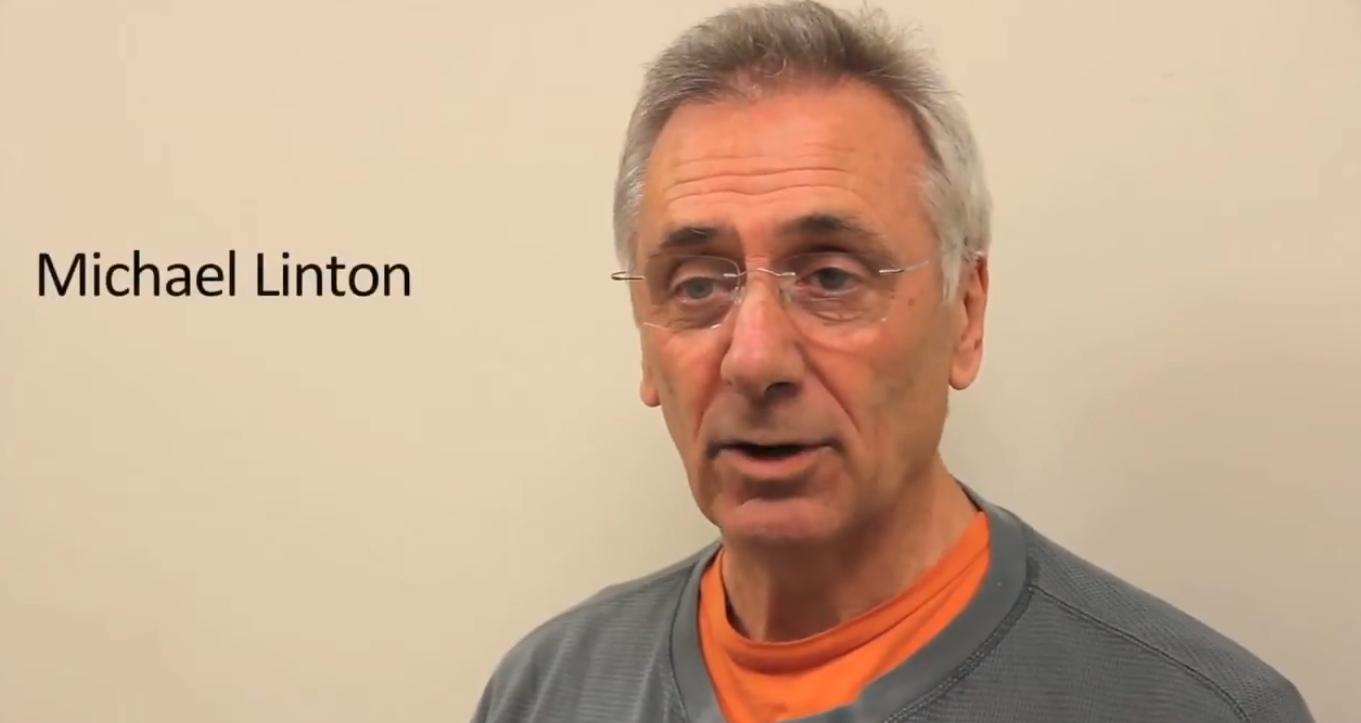 Michael Linton, Creator Of L.E.T.S.
Linton created the first LETS network in Vancouver Island's Comox Valley after a mine closure left the local economy hollowed out. His design was elegant: members listed offers and needs; when A helped B, A was credited and B was debited. Value was created by agreements between members.
Key principles set LETS apart from conventional money: no interest is charged on negative balances, issuance is community-controlled, and there's an explicit focus on local resilience over profit. Linton called his vision "open money" - the idea that communities should be free to create their own exchange systems rather than depending entirely on centralized, interest-bearing currency.
LETS spread to hundreds of communities across Canada, the UK, and Australia. Individual networks stayed small - personal trust is hard to scale - but the idea was sustainable ... and Linton's writings caught the attention of a young Internet developer.
USD Is Social Credit
Before I elaborate on that, it's worth noting that the U.S. dollar is, itself, a form of social credit.
Modern fiat currency is backed by ... nothing. The domestic gold standard ended in 1933, before most of us were born. A dollar is a piece of paper whose value rests entirely on collective agreement, with the authority and taxing power of the United States government. "Full faith and credit" is the phrase that most people associate with this concept.
The difference between a dollar and an Amish barn-raising debt, or a LETS green dollar, is not the underlying principle. It's scale, formalization, and who controls issuance. In the case of the U.S. Dollar (USD), citiznes have no say in how much is created.
But in both cases, value is assigned because people believe in it.
Ryan Fugger and the Vision of RipplePay
In 2004, Ryan Fugger launched "RipplePay".
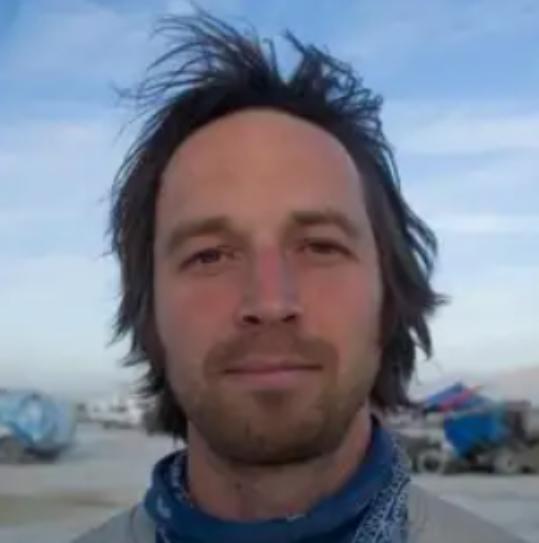 RipplePay Creator Ryan Fugger
Credit already flows through personal networks - friends lend each other money, and businesses extend trade credit to trusted customers - but these informal networks are isolated. You might trust Alice, and Alice might trust Bob, but you and Bob have no way to transact using that chain of trust.
Fugger's solution was a pathfinding algorithm.
Users declared credit limits to people they trusted. When a payment needed to route between two parties with no direct relationship, the system found a chain of trusted intermediaries and converted IOUs along the way - no central authority, no bank, no collateral required. He described it as a monetary system built entirely on relationships.
It was built on Linton's foundation: where LETS maintained a single ledger for a single community, RipplePay was decentralized and networked - a web of trust that could, in theory, span the entire world. It remained a modest proof-of-concept, but its architecture was so compelling that in 2011–12, a group of developers approached Fugger for his blessing to evolve the project.
That evolution became the XRP Ledger. Fugger later renamed his original project Rumplepay to avoid confusion, and it still runs today at rumplepay.com.
Bridging The Gaps With A Neutral Asset
The developers who built the XRP Ledger preserved Fugger's trust-line architecture ... but added something his original system lacked: a neutral bridge asset.
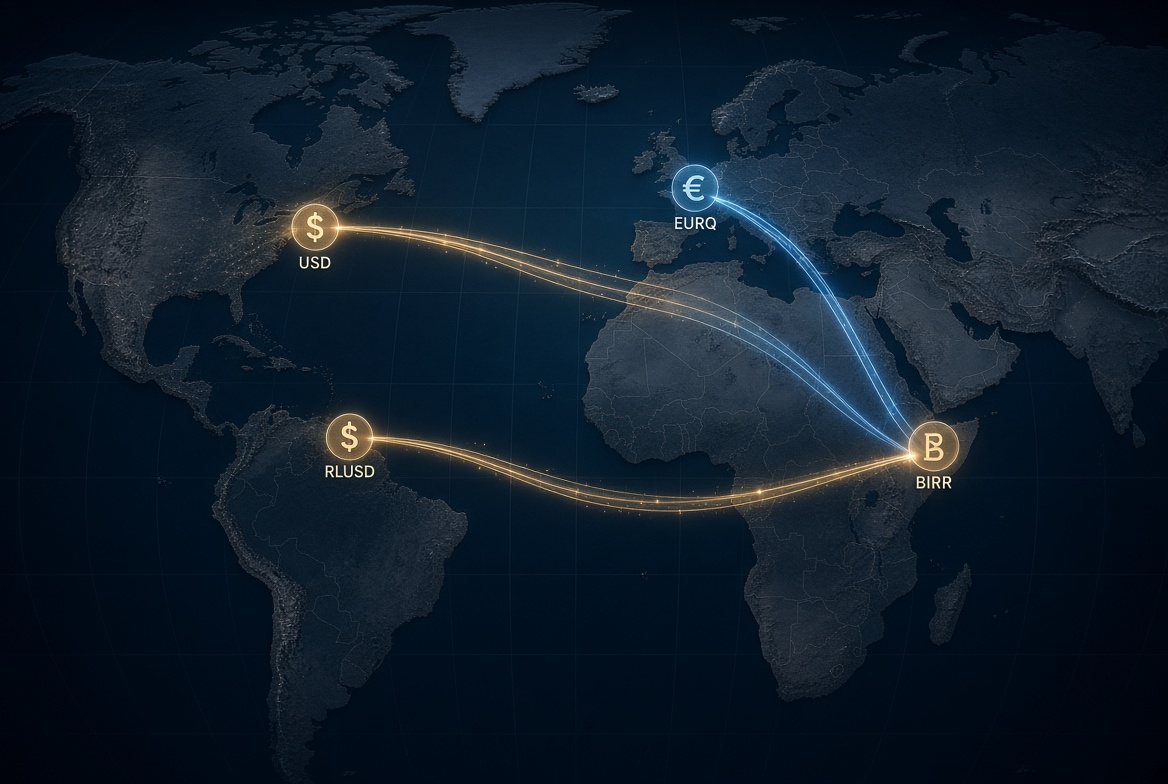
In a pure social credit network, every payment requires a connected chain of trust between sender and receiver. That works within well-connected communities, but breaks down at the edges - when no common trusted intermediaries exist. XRP was designed to address this problem. As a natively-issued, neutral asset, XRP can serve as a universal bridge: if no trust path exists, a market maker can complete the transaction using XRP, accepting one currency on one side and delivering another on the other.
An early explanatory video about the XRP Ledger, referenced on the RumplePay site, still emphasizes the social credit architecture explicitly, describing a future where value flows through human relationships as naturally as information flows through the Internet:
Three Levels of Social Credit
Across all these systems, social credit operates at three distinct scales.
At the individual level, it's the most elemental: one person trusting another. Examples include:
- An IOU between friends
- A trade credit from a small business owner
- A barn-raising debt
At the individual level, social credit is limited to a personal network.
At the community level, trust is aggregated enough to circulate across a small group. LETS networks and Amish mutual-aid funds operate at this level. Members don't need to know each other personally - but they must trust the community.
At the organizational level, institutional reputation is key. Banks, governments, and corporations all issue credit backed by public records and legal enforce-ability. The U.S. dollar is the most obvious example.
The challenge is to build the interface between levels: a system that lets individual trust aggregate into community credit, and community credit connect with organizational credit, without routing everything through a single central authority.
That's precisely what Ryan Fugger was aiming for with pathfinding, and what the XRP Ledger's - and Xahau's - architecture supports in the cryptocurrency realm.
The Real Potential
In a perfect trust network, you don't need money ... at all. Not dollars, not crypto, and not gold ... just relationships and the willingness to honor commitments. It's how the Amish have operated for generations, and how LETS networks kept communities exchanging during recessions when (trad-fi) money disappeared.
The credit was social, and it was real.
What modern technology adds, is the ability to solve the scaling problems without abandoning the social foundation. Cryptographic identity can enforce commitments across large networks. Mathematical algorithms can find trust paths in real time. Interoperability protocols can connect isolated community systems.
 Xaman Non-custodial Wallet On The XRP Ledger & Xahau
Neutral bridge tokens (XRP & XAH, e.g...) can fill liquidity gaps between issued assets.
A Thread Through History
From Amish barn raisings to Michael Linton's green dollars to Ryan Fugger's RipplePay to the XRP Ledger & Xahau - the thread is very real, even if the actors didn't always know they were part of a common tradition stretching back many years.
Credit is fundamentally a social act. It depends on trust, and trust depends on relationships, reputation, and shared commitments. The traditional financial system, or 'trad-fi', has built enormous machinery to simulate that trust.
But independent of all the fiat machinery, the original idea has stood the test of time. X | X>
Sources
https://www.lowimpact.org/posts/lets-origins-michael-linton-letsystems/
https://cascadiaunderground.org/lets-the-local-exchange-trading-system/
Michael Linton still image from: https://www.youtube.com/watch?v=WU09j9Nwv10
https://dailycoin.com/ryan-fugger-ripple-xrp-true-creator/
https://ripple.ryanfugger.com/Main/FAQ.html
https://www.youtube.com/watch?v=f9KqSgRZYgg&t=4s
https://www.youtube.com/watch?v=WgUqNhwVWhU
https://systemschangealliance.org/mutual-credit-an-introduction/