The Lost Crypto
In 2013, a British IT worker named James Howells cleaned out his desk, tossed an old hard drive in the trash, and threw away roughly 8,000 BTC.
He knows exactly where it is: a specific cell in the Docksway landfill in Newport, Wales. He has spent years - and a small fortune in legal fees - trying to get permission to dig it up. As of today, that hard drive is still there, and at recent prices, so is a fortune worth hundreds of millions of dollars.
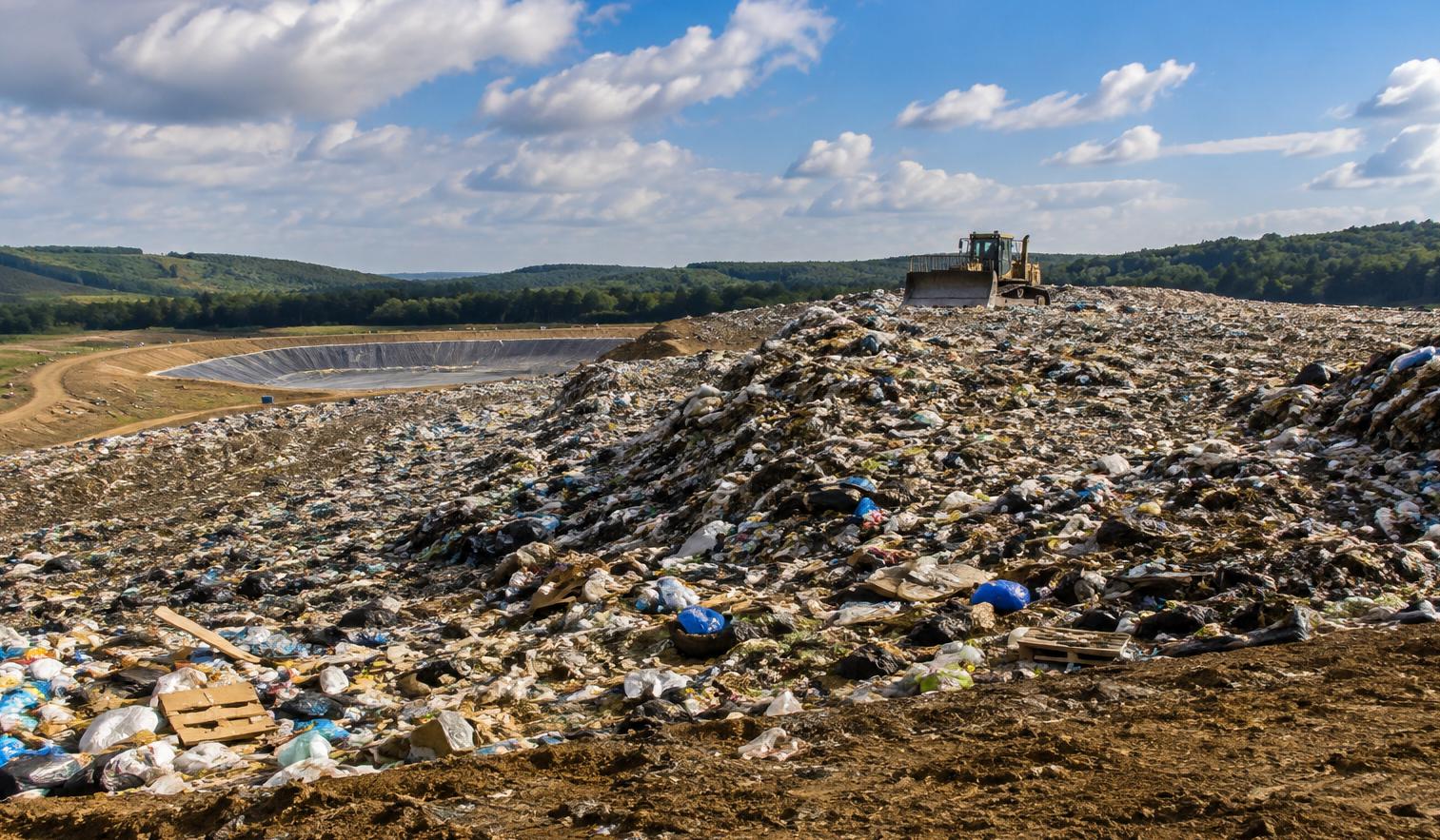 A Landfill Holds 8,000 BTC
It's one of the most-told stories in crypto, and also one of the most misleading, because it makes "lost crypto" sound like a freak accident.
It isn't.
It's a byproduct of how crypto networks are designed, and it happens at a scale most people never think to ask about. When a business audience looks at a chain's stated supply - 21 million BTC, 100 billion XRP - that number implies every unit is out there, live, and potentially in play. In reality, a slice of any chain's supply is inert: unreachable, untouched, and for practical purposes, gone.
"Lost" crypto generally falls into a few categories:
- Death - an owner dies and never told anyone where the keys were, or how to use them.
- Lost or destroyed storage media - the Howells story is the extreme version, but discarded phones, wiped laptops, and corrupted drives are a major occurrence.
- Forgotten passwords - encrypted wallets where the owner is alive, but can't remember the passphrase.
- Smart contract bugs and freezes - code errors that lock funds permanently, with no theft involved.
- Dormant early-era coins - balances that have not moved since the network's earliest days, for unknown reasons.
The last category is the trickiest: on-chain data can show that a wallet hasn't moved in ten years. It cannot show why. A dormant wallet looks identical whether the owner died, lost the keys, or is simply a long-term 'hodler'.
Every statistic in this article inherits that uncertainty - the numbers are very rough estimates, not audited totals.
Lost BTC
On the BTC chain, coins don't sit in accounts, they sit in individual, traceable "unspent transaction outputs" ("UTXOs"). A coin mined in 2009 that hasn't moved is still sitting there - which lets analysts age-bucket the entire supply and estimate how much of it is gone.
The most-cited figure comes from blockchain analytics firm Chainalysis, whose research puts permanently-lost bitcoin at somewhere between 2.3 and 3.7 million BTC - roughly 11% to 18% of the fixed 21 million supply cap.
Other analysts have pushed the estimate as high as 4 million BTC, and some methodologies that include the "Satoshi" dormant wallets put the figure closer to 20% of the entire supply!
An estimated 1.1 million BTC sit in wallets attributed to Bitcoin's supposed creator, untouched since 2009–2010.
Nobody knows whether the keys still exist in usable form, whether "Satoshi" is an actual person or group of people, or whether those coins will ever move. Beyond Satoshi, the losses are overwhelmingly concentrated in BTC's earliest, most casual years - before hardware wallets, before seed-phrase standards, when the asset was worth cents and nobody treated key management as a serious discipline. James Howells' landfill drive is simply the most famous individual instance of a pattern that played out thousands of times, in less dramatic ways.
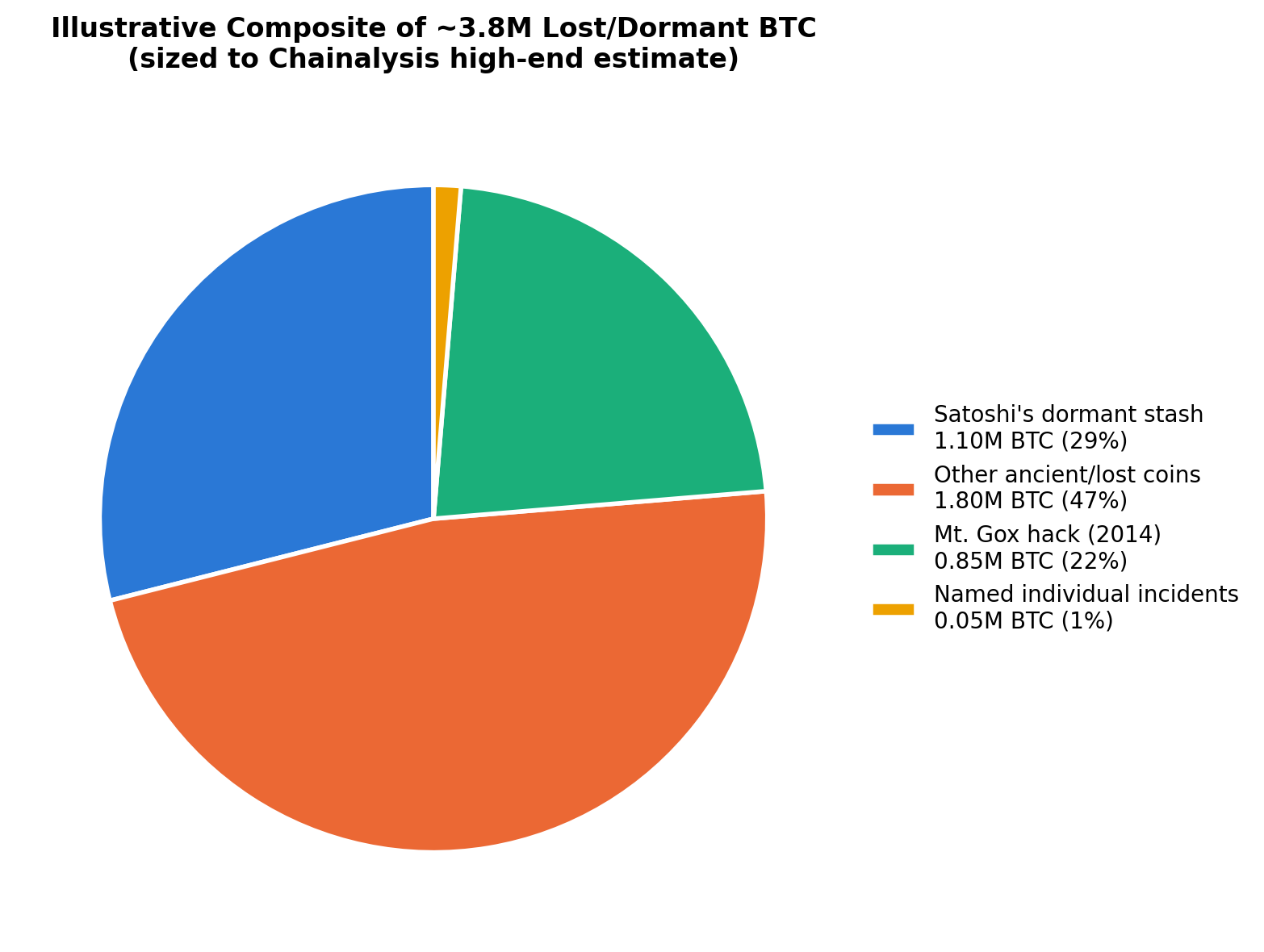 ~3.8M Lost/Dormant BTC
Lost ETH
The single largest documented individual loss on any major chain traces to Ethereum: the 2017 Parity multisig bug, in which a user accidentally triggered a flaw that permanently deleted the shared code library underpinning hundreds of multisig wallets. The result: 513,746 ETH - worth $1.93 billion at recent prices - frozen across 587 wallets.
The funds became permanently inaccessible, including a large stake belonging to the Web3 Foundation.
One 2025 analysis found that 913,111 ETH - about $3.43 billion - has been permanently lost to user error and contract bugs across Ethereum's history, representing roughly 0.76% of total supply. Add in the ETH deliberately burned through Ethereum's fee-burning mechanism (a different, intentional category, not "loss") and over 5% of all ETH ever created, worth more than $23 billion, has been permanently removed from circulation.
XRP: A Different Story
This is where it gets interesting for XRP fans like myself.
The XRP Ledger has no Chainalysis-style dormancy study the way Bitcoin does - there's been far less independent forensic research done on it. But a few well-documented patterns exist, and one of them is unique to how XRPL was designed.
The reserve mechanic is the key.
Every XRP Ledger account is required to hold a minimum balance, called the base reserve, simply to stay active - a spam-prevention measure. That minimum has not stayed constant. It started at 1,000 XRP when the ledger launched, then was progressively lowered by validator vote: to 200 XRP, then 20 XRP (from 2013 to 2021), then 10 XRP, and most recently down to just 1 XRP in late 2024, largely as XRP's market price climbed and the old thresholds became disproportionately expensive to maintain.
The effect: every time the reserve requirement dropped, it left behind a trail of accounts that were funded to the old minimum and then abandoned. On-chain analysis has identified over 1.1 million wallets holding a combined 16.7 million XRP sitting at these legacy reserve minimums (many at exactly the old 20 XRP threshold), untouched for years. It's a form of "lost crypto" essentially unique to XRPL's design - Bitcoin has no equivalent minimum-balance mechanic to leave this kind of trail.
Beyond reserve dust, a manual review of the ledger's top 100 largest dormant wallets - untouched for over ten years - turned up roughly 106 million XRP.
Layer in one more category - known theft, which is philosophically distinct from loss since a thief is an active possessor, not an absence of one. The largest documented case is a 2024 credential-compromise theft from Ripple co-founder Chris Larsen, in which roughly 283 million XRP (about $150 million at the time) was stolen after private keys stored in a password manager were compromised in an earlier breach. Forensic trackers followed the funds moving rapidly through multiple exchanges - the classic signature of active theft rather than genuine loss.
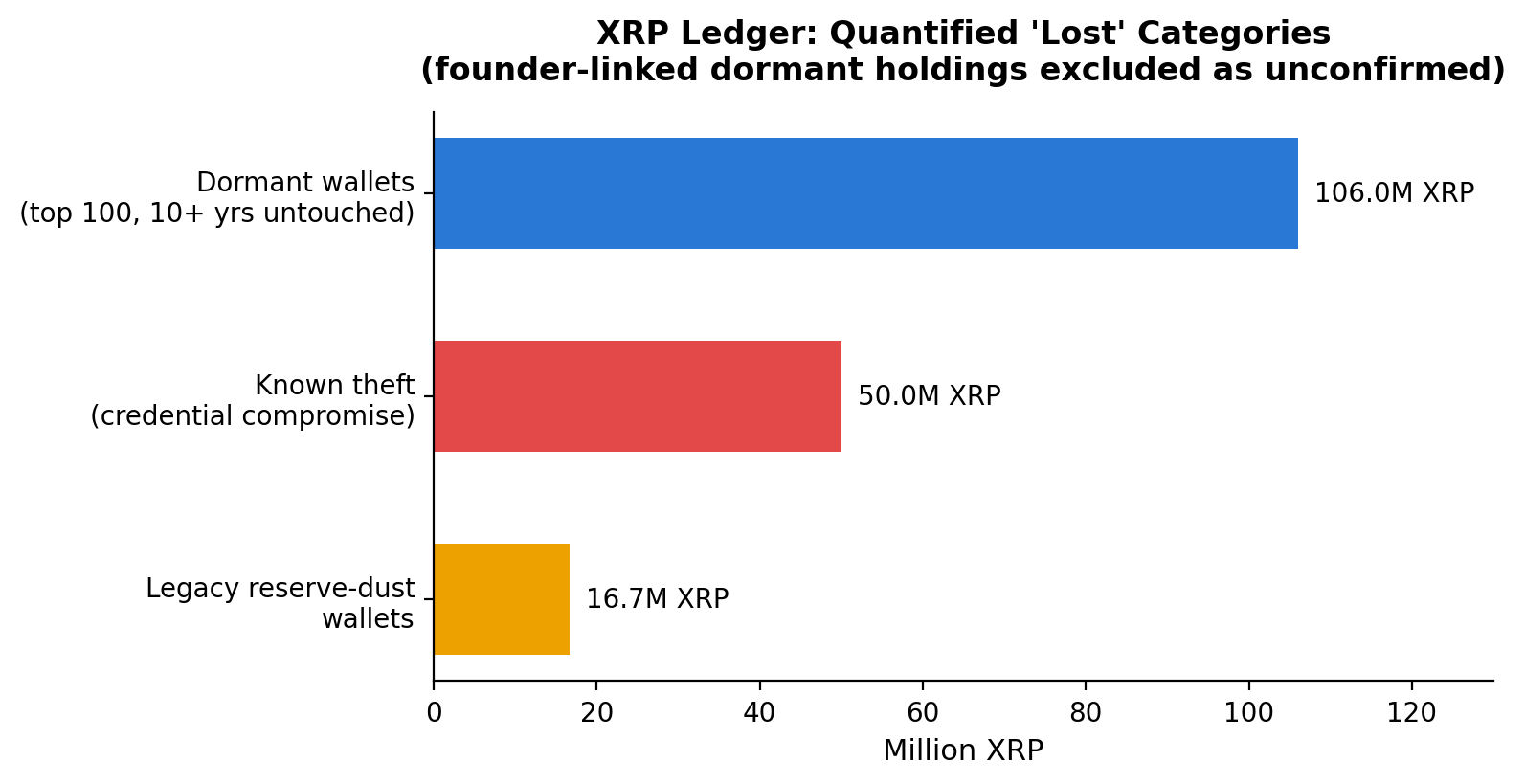 XRP Ledger 'Lost' Categories
Put those three categories together and XRP's total sits at roughly 172.7 million XRP - a mere 0.0017% of total supply. Compare that to Bitcoin's 11–18%+ and the gap is dramatic. Some of that may reflect XRP being a younger network with less time for keys to be lost to death or decay. But a large part of the answer is simpler: nobody has done the exhaustive dormancy research on XRP that Chainalysis has done on Bitcoin for over a decade.
Estates: Making Sure It Isn't You
Every story above shares a common thread - someone, at some point, had no working plan for what happens to their crypto if they become unable to access it themselves.
Owning self-custody crypto is not the same a bank account; there's no customer service line to call, no password reset, no next-of-kin override. The same cryptographic strength that makes crypto secure against theft also makes it hostile to inheritance. Fortunately, a set of techniques and tools has developed to address this problem.
Multisig wallets are the most-established approach. A wallet requires a threshold of keys (say, 2-of-3) to move funds - you hold one, a spouse or attorney holds another, and heirs only need to gather the required number of keys, not one single perfect password. Managed services like "Casa" and "Unchained Capital" build on this. The tradeoff with any managed service is obvious: your plan is only as durable as the company behind it.
Shamir's Secret Sharing takes a different approach, splitting the seed phrase into multiple fragments (e.g., 3-of-5 needed to reconstruct it), typically stored on separate metal plates in separate locations.
Dead man's switches automate the release of access after a period of inactivity, and this is where things get interesting on the newest ledgers.
Xahau: Purpose-Built Solutions
The XRP Ledger itself is deliberately limited - it doesn't support general smart contracts, by design. Xahau, a network built using the XRPL code, added a feature called Hooks: WebAssembly modules that attach custom logic directly to an account and trigger on specific ledger events. That capability opens up inheritance mechanisms that aren't possible on XRPL.
Two of the following are unique to Hooks; the third works identically to standard XRPL multisig:
- A dead-man's-switch hook. One community-developed version nominates a beneficiary address via a stored HookParameter, and tracks a rolling "ledger limit" - roughly 1–2 years' worth of ledger closes. Every time the account holder transacts normally, the hook resets the countdown automatically. If that threshold is ever exceeded - meaning the account has gone untouched for the full window - the nominated address becomes able to withdraw the balance.
- A fully open-ended hook that can accept virtually any triggering input and then release its balance according to whatever logic the account owner codes - a flexible foundation that developers can shape into custom inheritance, escrow, or conditional-release mechanisms ... limited only by imagination.
- Standard multisig, identical in concept to XRPL's native multi-signature accounts, requiring no Hooks at all - included here simply because it's available on Xahau exactly as it is on the XRP Ledger.
These are elegant, native-on-chain answers to the single biggest cause of "lost crypto": death or incapacitation without a technical path forward. They also carry a symmetrical risk - a poorly configured inactivity window can trigger a transfer while the owner is still alive and simply traveling, and unaudited smart-contract code is its own category of danger.
New tools, techniques, and services have now begun to be developed to verify hook-based smart contracts. These 'prover' tools are very new, and some of them exist on a site called 'Kairo Vault', developed by Hugegreencandle.
The Passage of Time
Every category in this article shares one property: it only grows.
Bitcoin's earliest coins get older every year, and the generation that mined or bought them in the 2009–2013 window is now, inevitably, aging with them - meaning "death without a plan" will eventually overtake forgotten passwords and discarded hardware as the dominant cause of future losses. The same clock is now ticking on every other chain as well, including XRP & Xahau, as its own early participants age alongside their holdings.
 Lost Crypto
The countervailing force is the one described in the prior section: the tools for preventing this are better, cheaper, and more accessible than they've ever been.
The technology that makes loss so permanent is the same technology now being used to prevent it. Whether that balance tips the "lost crypto" percentage down over the next decade, rather than up, will depend less on the chains themselves than on how many people actually put a plan in place before they need one. X>
Sources
- "How Many Bitcoin Are Lost?": https://www.ledger.com/academy/topics/economics-and-regulation/how-many-bitcoin-are-lost-ledger
- "Bitcoin's $30 billion sell-off" (Chainalysis methodology on lost BTC): https://www.chainalysis.com/blog/money-supply/
- "Lost Bitcoin: 3.7 million Bitcoin are probably gone forever" (Decrypt): https://decrypt.co/37171/lost-bitcoin-3-7-million-bitcoin-are-probably-gone-forever
- "Ethereum ghost ledger: $23b gone, burned, or bugged" (lost/burned ETH breakdown): https://www.itiger.com/news/2554743978
- "Parity Multisig Wallet Bug Locks 513k ETH": https://dn.institute/research/cyberattacks/incidents/2017-11-06-parity/
- "Lower Reserves Are Now In Effect" (XRPL.org, 2021 reserve reduction): https://xrpl.org/blog/2021/reserves-lowered
- "Lower Reserves Are In Effect" (XRPL.org, 2024 reserve reduction): https://xrpl.org/blog/2024/lower-reserves-are-in-effect
- "Over 1.1 Million XRPL Wallets Hold $51.7 Million in Dormant XRP" (reserve-dust wallet analysis): https://www.mexc.com/news/101776
- Ripple co-founder dormant/stolen XRP wallet tracking (ZachXBT reporting): https://www.theblock.co/post/364164/ripple-chris-larsen-xrp-zachxbt
- "What Happens To Your Crypto When You Die? Casa Inheritance Has a New Solution" (Unchained): https://unchainedcrypto.com/what-happens-to-your-crypto-when-you-die-casa-inheritance-has-a-new-solution/
- Xahau Hooks documentation: https://xahau.network/docs/hooks/
- Xahau dead-man's-switch hook concept (X/Twitter post by @Satish_nl): https://x.com/Satish_nl/status/1864065517612327047
- Xahau dead-man's switch hook code by Handy Andy: https://github.com/Handy4ndy/HandyHooks/tree/main/Beneficiary
- Kairo Vault & hook 'prover' tech: https://kairovault.com/prove.html