Xahau: Not Just A Sidechain
Xahau launched as a mainnet near Halloween of 2023.
The original vision wasn't just a simple sidechain bolted onto the XRP Ledger - it was a fully independent network, one that would be inextricably linked to the XRP Ledger through trustless, cryptographic bridges.
Due to regulatory uncertainty with some types of bridge architectures, the first of those bridges was a non-custodial one known as xPoP (based on XLS-41). The mechanism it powered, called Burn2Mint, let users burn XRP on the XRP Ledger mainnet, generate a cryptographic proof of that burn, and mint equivalent XAH on Xahau - all without trusting a custodian.
Although the negative gap in chain-specific asset prices prompted the validators to vote for the amendment to be deactivated, it was an elegant, trustless approach to cross-chain value transfer, and it set the tone for how Xahau's creators thought about the relationship between the two networks.
XRP Plus
Here's a piece of Xahau's origin story that doesn't get told often enough: XAH wasn't always called XAH. Early on, the token was referred to internally as XRP Plus - a name that perfectly captured how the creators envisioned the two networks working together, and explains the idea behind 'burn-to-mint'.
The tokenomics were intentional.
The burn-to-mint model, the higher fee burns triggered by smart contracts ("hooks"), the incentivized validators - all of it was designed with a "rapid adoption" scenario in mind, one where Ripple itself might embrace a smart-contract-capable companion chain running its own native asset alongside XRP.
Imagine a parallel reality where the largest champion on the XRP Ledger, Ripple, burned billions of its XRP (minting billions of new XAH) so that they can then use XAH to address any use cases that their customers desire, that involved more complex account interactions. If that had happened, Ripple would have been, by far, the largest holder of XAH on Xahau, and the XAH tokenomics model would have been a huge benefit to XRP holders, given its much smaller supply. (Imagine a scenario where retail XRP holders used burn-to-mint if XAH was priced 4 times higher than XRP!)
Ripple chose a different direction, pursuing EVM-compatible sidechain initiatives.
But Xahau's creators - the Xahau Launch Alliance - didn't walk away from the idea of a compliment network. They kept building: bi-network block explorers, DEX overlay software, and shared tooling that made the two networks feel like they belonged together. The identical address format (r-addresses work across both chains) wasn't an accident - it was a design decision that lowered the barrier for any XRPL user or developer to interact with Xahau.
You can read more about that topic here: One Secret Key: Two Networks
Technical
Xahau's xahaud software is a fork of XRPL's rippled, and the two share the same foundational layer: identical Layer 1 cryptographic algorithms, r-addresses, and the consensus mechanism. Developers who know the XRP Ledger will find Xahau immediately familiar, and much of the documentation on xrpl.org applies directly.
Where Xahau diverges is in what it adds:
- Hooks - lightweight, account-level smart contracts that execute logic on transactions flowing to or from an account
- URITokens - a leaner alternative to XLS-20 NFTs, optimized for metadata and asset representation
- Incentivized Infrastructure - validator rewards and tokenomics designed to sustain a programmable network
- Faster Consensus - Project L-10K; scale up to 10,000 transactions per ledger
The result: all of XRPL's proven strengths - 3–5 second settlement, low fees, energy efficiency - plus programmability, without sacrificing performance.
Finternet Use Cases
There's a concept gaining traction called the Finternet - a term coined by the Bank for International Settlements (BIS) to describe an Internet-like vision for financial systems: interconnected, tokenized, user-centric, and capable of seamless cross-border flows.
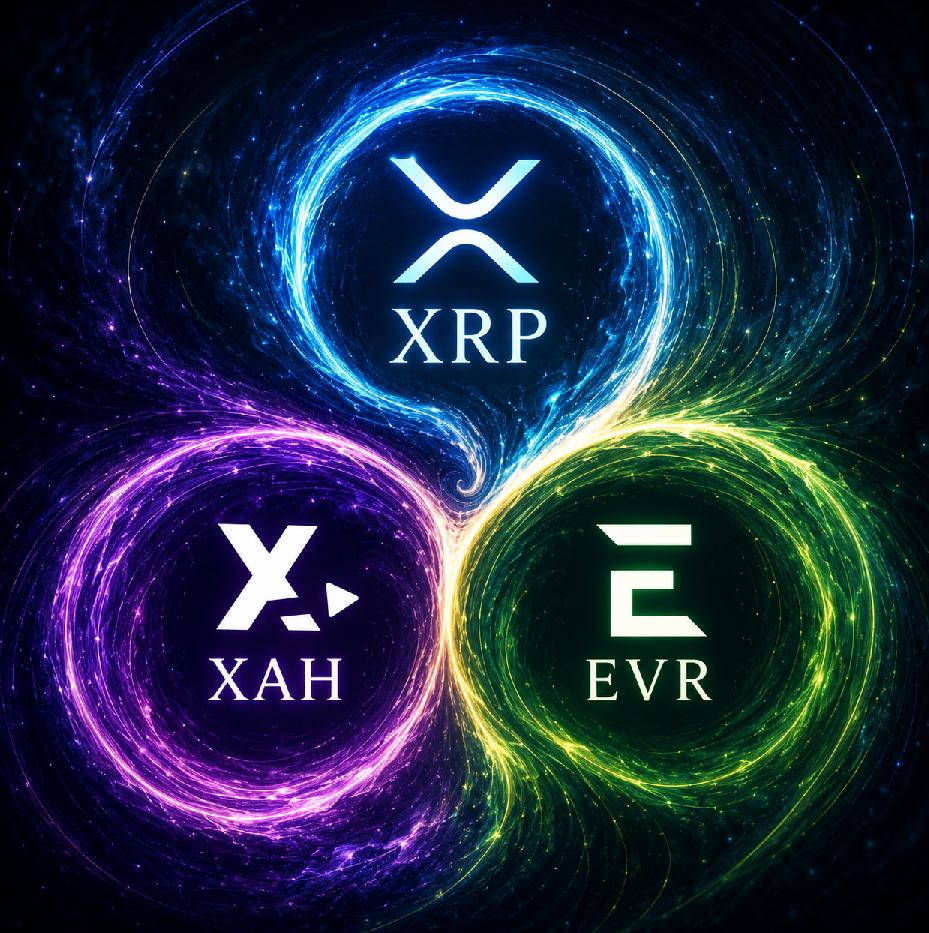
Within the XRPL-family ecosystem, a compelling fan-driven framework has emerged that maps three networks onto that vision:
| Network | Role |
|---|---|
| XRP Ledger | Fast, deterministic settlement - the standard for payments and tokenization, requiring no incentives |
| Xahau | The smart contract layer - Hooks-powered programmability with incentivized infrastructure |
| Evernode (EVR) | Decentralized compute and hosting (dePIN) - neutral infrastructure for off-chain and heavy computation |
Together, this trio covers the full spectrum of conceivable use cases: real-time payments, programmable finance, tokenized assets, compliance automation, decentralized hosting.
 Consensus Protocol Ecosystem
In this vision, each network plays a distinct role, and the shared DNA between XRPL and Xahau makes interoperability intuitive rather than bolted on.
Xahau Also Stands Alone
While the complementary perspective is compelling, Xahau is also pursuing its own path.
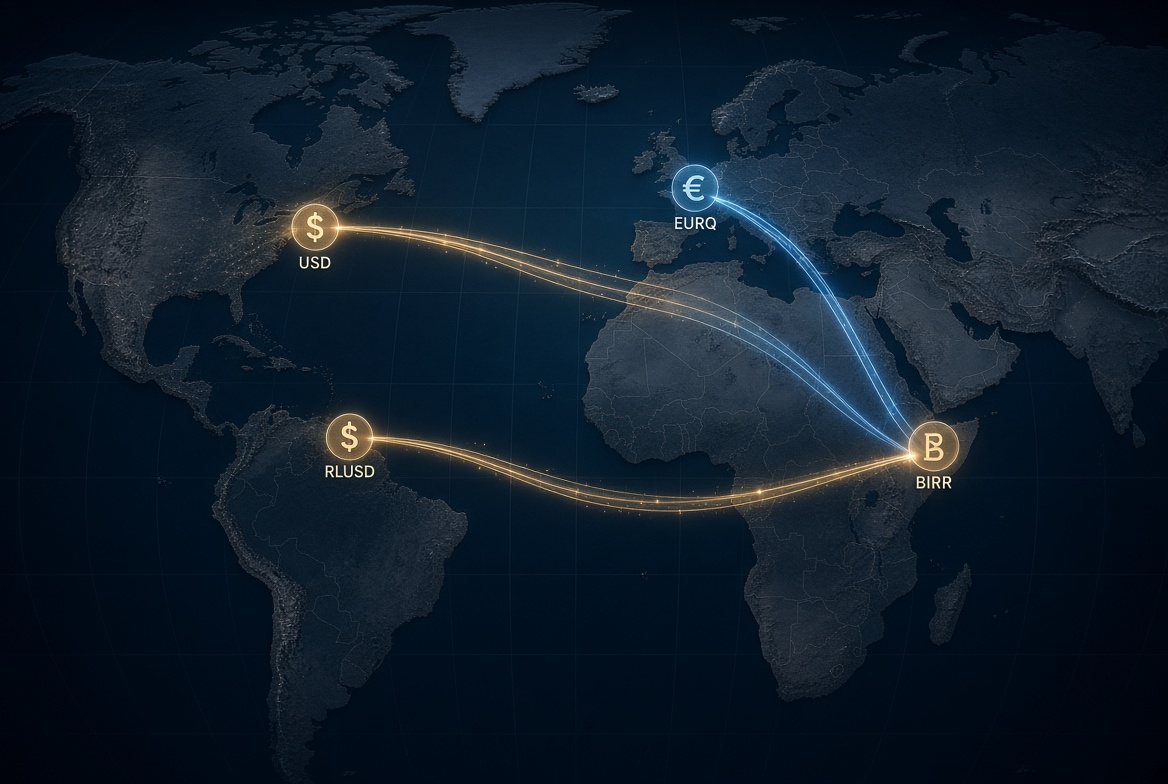
The clearest proof of this is a recent project involving three organizations - Cooperative Bank of Oromia (Ethiopia), Quantoz Payments (a regulated digital asset issuer), and TerraPay (a world-wide payments network). Together, they're using Xahau as the settlement layer for Euro-denominated remittances flowing from Europe to Ethiopia.
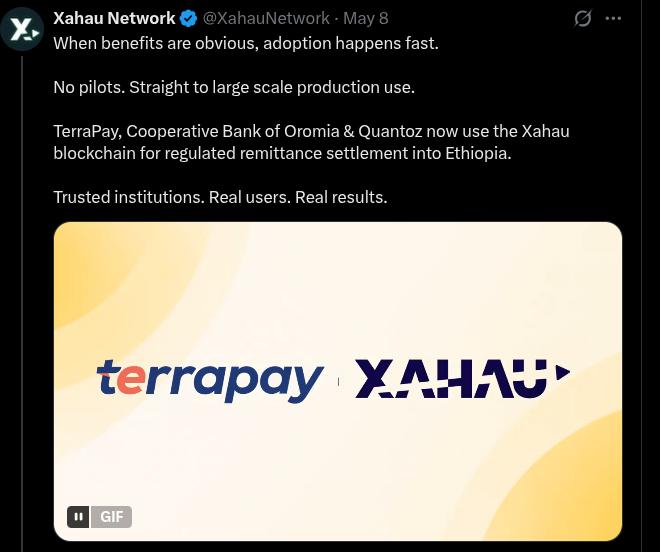 Xahau Terrapay - Quantoz - Coop Project
This is a real-world, regulated blockchain settlement system targeting significant transaction volumes. It leverages Xahau's speed, determinism, and account-level smart contract functionality for compliance and efficiency. And notably, it doesn't rely on the XRP Ledger or Evernode to function. It's all Xahau.
It signals that enterprise-grade financial institutions are evaluating Xahau on its own merits.
Xahau Is More Than A Sidechain
Xahau started as a vision of what the XRP Ledger could be with smart contracts. It has since become something more: a full Layer 1 network with its own growing ecosystem (200,000+ accounts, millions of transactions), its own enterprise integrations, and its own roadmap.
It remains, by design, the ideal smart contract complement to the XRP Ledger - identical addresses, shared tooling, and trustless bridges make that relationship as seamless as any two independent networks can be. But the label "sidechain" undervalues what Xahau has become.
The 2026 roadmap - focused on scalability, accessibility, and security - reflects a network charting its own course. X>
Sources
Xahau roadmap: https://xahau.network/roadmap/
BIS Finternet Paper: https://www.bis.org/publ/work1178.htm
Xahau Network announcement: https://x.com/XahauNetwork/status/2051927674365300854?s=20
https://x.com/Quantoz/status/1986366890906694090?s=20
https://support.gatehub.net/hc/en-us/articles/14752835197842-Introducing-Xahau#
https://xahau.xrplwin.com/apps/xapp:xahau.teleport
xPoP: https://xls.xrpl.org/xls/XLS-0041-xpop.html
Coopbank official announcement: https://coopbankoromia.com.et/coopbank-and-terrapay-launch-blockchain-based-remittance-settlement-to-enhance-cross-border-transfers/
TerraPay press release: https://www.terrapay.com/media/terrapay-launches-cross-border-blockchain-remittances-to-ethiopia/
InFTF news: https://inftf.org/news/blockchain-settlement-euro-remittances-ethiopia/
Quantoz: https://x.com/Quantoz/status/1986366890906694090?s=20
Authoritative Links:
xrpl.org (applicable across both networks)